Event 1
Queen Reinstates Old Vampire Law and Establishes Human Breeding Farms
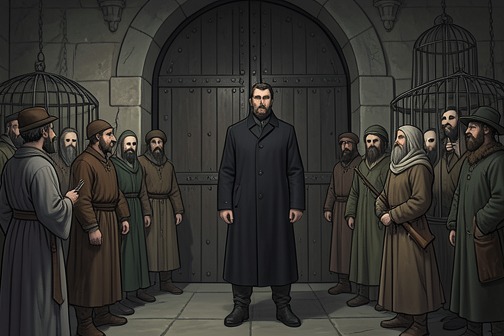
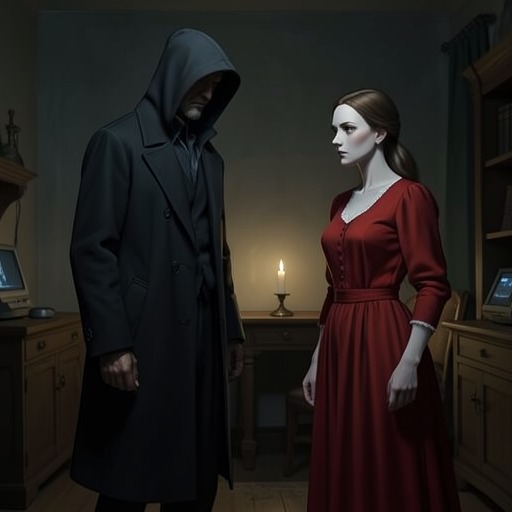
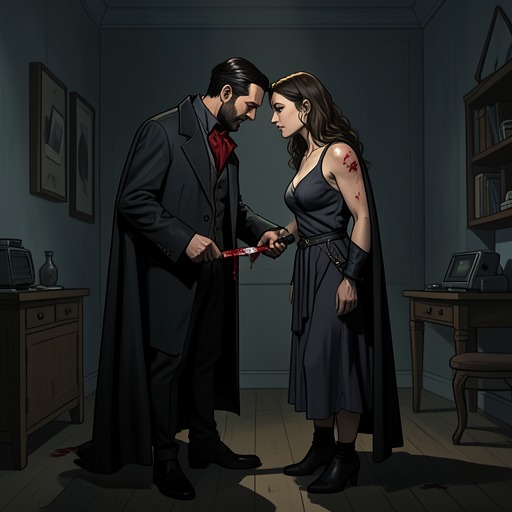
[Queen Reinstates Old Vampire Law and Establishes Human Breeding Farms](entity:event-recall-event-11b30be9f21b) is the decisive political event that transforms [Ichoryllia](entity:location-recall-location-ichoryllia-071711da169b) from a society in which [Humans](entity:creature-recall-creature-42208ca664ac) had been treated as near-equals into one organized around explicit vampire dominance. The Queen’s restoration of the old order is presented not as an isolated legal adjustment but as a coordinated regime change: Human breeding farms open immediately, public dissent is crushed, religious symbols are replaced, and Humans become legally and materially available as food and property.
## Causes and Political Background
The event follows the Queen’s accession and the collapse of the previous royal order. [Aleksander Dumoulin](entity:character-recall-character-aleksander-dumoulin-4c9cd3d1a321) regards the old king as weak because he had introduced nothing new and merely preserved the policies inherited from his parents. By contrast, the Queen’s laws are extreme enough to awaken Aleksander’s ancient predatory instinct. Their speed also makes him suspicious. Human breeding farms appear on the same day the old vampire laws are reinstated, a coincidence he considers impossible without prior preparation and evidence that corruption has reached the highest levels of power.
The restored laws reverse an earlier social arrangement in which Humans moved openly through the city and many worked in blood banks. After the change, the streets contain mostly [Vampires](entity:creature-recall-creature-1b7e05785f01), while the Human population is removed from ordinary civic visibility. The transformation is therefore both legal and spatial: a change in status becomes visible in who may walk freely, who is confined, and whose bodies supply the kingdom.
## Enforcement and Social Reordering
The Queen’s regime does not tolerate opposition. Some Vampires are horrified by the new laws, particularly because hybrid families are torn apart, and protesters take to the streets. The Queen responds with violence and death, cutting short any attempt at revolution. Aleksander expects the population eventually to settle, not because the laws are accepted through open deliberation, but because coercion makes resistance dangerous and temporary.
The event also establishes a sharper classification between Vampires and Humans. Aleksander does not describe himself as hating Humans; instead, he accepts their subordination as the natural order and believes they must return to their supposed place on the food chain. His response reveals how the regime’s hierarchy is normalized through the language of nature. A political decision is recast as biological inevitability, allowing domination to appear less like a new construction than a recovery of an ancient truth.
## Breeding Farms and the Human Pet Market
The breeding farms are the institutional foundation of the restored system. At the Human pet store, the proprietor explains that the adults for sale were captured in the city, while Humans produced on the farms are still only babies. This distinction shows that the new order has two complementary channels of supply: seizure removes existing Humans from public life, while controlled reproduction creates a continuing population for vampire consumption and ownership.
The pet store makes the regime’s ideology concrete. Its building had once sold merchandise for Humans; under the new laws, it sells Humans themselves. The irony exposes the transformation of a commercial space into an apparatus of commodification. Inside, cages line the walls, and each contains a Human, straw, water, and food scraps. Some prisoners sleep, while others cling to the bars in panic. Their confinement turns legal dispossession into a visible material condition: Humans are no longer treated as members of the city but as inventory.
Aleksander participates directly in this market. He selects a black gemstone collar and gives it to [Esmeralda](entity:character-recall-character-esmeralda-32d382dfd1fd), ordering her to put it on and declaring that she belongs to him. The purchase and collar enact the restored law at the level of a single body, translating royal policy into ownership, restraint, and obedience. Yet Esmeralda’s rebellious gaze and refusal to comply prevent the scene from becoming a simple confirmation of the system’s power. Her resistance remains present even while the institution attempts to define her as a pet.
## Religious and Ideological Transformation
The Queen’s program extends beyond blood and property into official belief. When Aleksander returns to [Ichoryllia Royal Castle](entity:location-recall-location-ichoryllia-royal-cas-f4f2324caf73), portraits of Hecate, the goddess and mother of Vampires, have been replaced by images of Alastor, demon and spirit of vengeance. Servants are repainting rooms and replacing curtains and chandeliers, making the political revolution visible in the castle’s altered interiors.
Aleksander is not religious, but he recognizes the replacement as wrong. The change demonstrates that the regime is attempting to control the symbolic history of the kingdom as well as its population. The old religious imagery associated with vampire origins gives way to a figure of vengeance, matching a government that enforces restored hierarchy through punishment. Because opposition to the Queen is punishable by death, private judgment becomes the only safe form of dissent; even a powerful nobleman must conceal what he thinks while continuing his work for the castle.
## Consequences and Narrative Significance
The reinstated laws create the conditions for Aleksander’s personal descent into the pet system. His family had traditionally preferred [Blood Wine](entity:object-recall-object-23f128f25e89) and regarded that practice as civilized, remembering the Dark Times when Humans were nearly driven to extinction. He initially tries to respect that inherited restraint, but the sight of the new order and the availability of Humans awaken an appetite that Blood Wine can no longer satisfy. His decision to visit the pet store two days later connects state policy to private desire: the Queen’s law does not merely permit predation; it makes predatory intimacy purchasable.
That connection produces the central contradiction of the event. The regime seeks to make Humans controllable through farms, cages, collars, and a rigid racial hierarchy, but Esmeralda’s relationship with Aleksander exceeds those categories. Her origin in a distant pack of [Werewolf Witches](entity:creature-recall-creature-b3c510fc4b22), her lack of wolf and magic, and the later recognition of the fated-mate bond all introduce rules that compete with the Queen’s law. Esmeralda’s mother, [Alyson](entity:character-recall-character-alyson-efbb1a6b2385), insists that the Moon Goddess does not respect racial boundaries and that the bond between fated mates is more important than ordinary divisions between species. The supernatural principle therefore challenges the state’s claim that race determines rightful status.
The event’s effects continue into the conflict between Aleksander and Esmeralda’s family. When the pack attacks [Dumoulin Mansion](entity:location-recall-location-dumoulin-mansion-c837e25cc790) and Aleksander calls Esmeralda his mate, the possessive language echoes the ownership system created by the Queen, but the later confrontation complicates it: Esmeralda chooses to return to him, and Alyson accepts that choice once the fated bond is acknowledged. Even Aleksander’s proposal to turn Esmeralda into a Vampire so that she can live as long as he does becomes a dispute between competing authorities—his species’ power, her family’s protection, and the Moon Goddess’s supposedly higher law.
As a result, Queen Reinstates Old Vampire Law and Establishes Human Breeding Farms functions as both political background and moral pressure. It reorganizes the kingdom through coercion, turns reproduction and blood into state-managed resources, and gives institutional legitimacy to the treatment of Humans as prey. At the same time, its attempt to make hierarchy absolute generates the conditions for its own limits, because blood desire, family loyalty, and the fated-mate bond continue to cross the boundaries that the restored order tries to enforce.
Event 2
Aleksander Buys Esmeralda
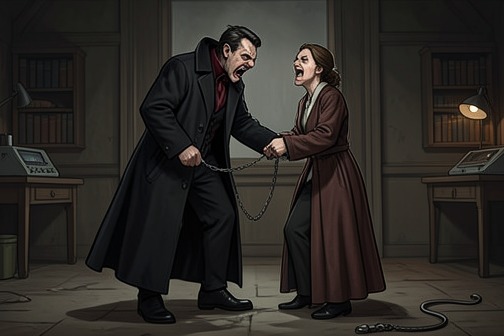
[Aleksander Buys Esmeralda](entity:event-recall-event-004145b56612) is the initiating event that converts [Aleksander Dumoulin](entity:character-recall-character-aleksander-dumoulin-4c9cd3d1a321)’s long-suppressed hunger into a concrete choice and brings [Esmeralda](entity:character-recall-character-esmeralda-32d382dfd1fd) into his life as a purchased human pet. The transaction is presented not as a neutral exchange but as a collision between a centuries-old vampire’s existential emptiness, a system that treats humans as merchandise, and Esmeralda’s fierce refusal to become obedient property. Its immediate symbols—the cage, the collar, the leash, and the threatened whip—establish the violence of the world they inhabit; its later consequences reveal that the purchase has created a bond neither character can contain within the categories of owner and prey.
## Causes and Background
Aleksander’s decision begins at [Ichoryllia Royal Castle](entity:location-recall-location-ichoryllia-royal-cas-f4f2324caf73), where he unexpectedly encounters Jason, a human identified as the new pet of Her Majesty. Jason appears well cared for and comfortable among the surrounding vampires, and his presence forces Aleksander to reconsider a possibility he had never seriously entertained: acquiring a pet of his own. Aleksander understands that Jason could not have come from a breeding farm, because those farms will not produce mature humans for another twenty years; the remaining explanation is the pet store. The distinction matters because it places Jason within the institutional route by which humans are collected, raised, and assigned to vampires, rather than treating his presence as an unusual personal arrangement.
The sight of Jason awakens more than curiosity. Aleksander experiences an intense, bodily desire that he can scarcely remember feeling before: his heart skips, his blood turns hot, and an impulse rises through him before he can give it a clear name. He wonders whether acquiring a pet might fill the void inside him. The desire follows him home to [Dumoulin Mansion](entity:location-recall-location-dumoulin-mansion-c837e25cc790), a large, tree-lined Victorian house with stained-glass windows, balconies, an ornate roof, and a garden where he enjoys strolling. The mansion has become unnecessarily spacious since the deaths of his parents, and its emptiness mirrors the absence Aleksander cannot resolve through ordinary companionship.
His mother had repeatedly urged him to find a vampiress and establish a family. Aleksander has been with many vampiresses, yet none has seemed right. His family also favored [Blood Wine](entity:object-recall-object-23f128f25e89), which his mother associated with civilization and moral distance from the brutal history of their race. She had warned him about the dark times when the human population was decimated and nearly driven to extinction, and Aleksander tries to respect the way she raised him. Even so, Jason’s appearance leaves behind a craving that Blood Wine cannot satisfy. The idea of a human pet becomes an obsession, and two days after seeing Jason, Aleksander goes to the [Ichoryllia Human Pet Store](entity:location-recall-location-ichoryllia-human-pet-64af010cc5e3).
## The Pet Store and the Search
At the store, the owner explains that the mature humans on display were caught in the city, while those produced on the farms are still only babies. Aleksander enters without knowing precisely what he seeks, trusting that recognition will come when the right human appears. The cages therefore turn his vague hunger into a sequence of judgments, each one exposing the discriminatory logic of the market. He rejects a pot-bellied man with greasy hair and the smell of sweat almost immediately. Two women, one red-haired and one blonde, are beautiful but fail to attract him. A young man with long, curly brown hair, blue eyes, and freckled skin makes him hesitate; Aleksander studies him for a long time, considers returning, and continues through the store in search of someone who will provoke a stronger response.
That response arrives at the back of the store, where Esmeralda is confined in a cage. She has long black hair and large brown eyes marked by defiance, and Aleksander believes centuries of craving fresh blood have taught him to read prey in a single glance. Esmeralda is unlike the other humans he has seen. Her torn, dirty rags do not make her appear passive; instead, they awaken disgust at the owner’s treatment of his merchandise and sharpen Aleksander’s attention to the conditions surrounding her. His attraction is thus intertwined from the beginning with the spectacle of degradation: he recognizes her as desirable within the vampire economy while also reacting against the cruelty that economy permits.
Aleksander asks Esmeralda her name directly, but the owner tells him that buyers need not address the humans themselves. Esmeralda answers with a refusal. When the owner warns her about rudeness toward vampires, she squints and spits at his feet. The gesture turns her defiance into open resistance, and the owner responds by reaching for a whip. Esmeralda gasps when she sees it. As the owner opens the cage and raises his arm, Aleksander’s anger overcomes the detached posture of a customer. He seizes the vampire’s wrist and challenges the way he treats the human.
The interruption changes the immediate balance of power. Aleksander does not merely object to the store’s manners; he orders the owner not to hurt the pet in whom he is interested. The owner lowers the whip, recognizing that the prospective buyer’s authority outweighs his own. Esmeralda’s frightened gaze moves repeatedly between the owner and Aleksander before she finally whispers her name, with her lip trembling. Aleksander repeats “Esmeralda,” savoring the sound as though the name already belongs to him, and announces that he will take her. The owner celebrates the choice, while Esmeralda screams her refusal. The scene converts her from a human resisting an abusive seller into the selected object of a more powerful vampire’s claim, even as Aleksander’s intervention has temporarily prevented the immediate blow.
## Purchase, Collar, and Departure
After completing the purchase, Aleksander returns to Esmeralda’s cage with a collar and tells her to put it on. The object is not incidental equipment. It makes the legal and social status of a vampire pet visible, transforming the store’s classification into something fastened around Esmeralda’s body. She does not comply, and Aleksander is drawn to the rebellious look in her eyes. He wants to tame her, revealing that his earlier anger at the owner’s violence does not amount to a rejection of domination itself. He opposes the seller’s treatment while still accepting the larger system in which a human can be bought, collared, and commanded.
When Esmeralda continues to resist, Aleksander moves close enough that she shrinks away. He tells her that he would rather walk her back than drag her, presenting coercion as a choice between degrees of force. A growl escapes him because, in his conception of the relationship, prey is supposed to be obedient. He can hear Esmeralda’s heartbeat accelerating, and its rhythm intensifies his primal hunger; the sound makes him eager to sink his teeth into her. Her fear therefore functions simultaneously as evidence of danger and as a stimulus for the appetite that brought him to the store.
Esmeralda eventually follows him outside, although she questions whether the leash is necessary. [Vampires](entity:creature-recall-creature-1b7e05785f01) in the street glance at them and can sense that she is human. Aleksander tells her that without the collar and leash they would devour her, making the restraints both instruments of ownership and a form of protection within vampire society. Her widened eyes suggest to him that she may not have come from [Ichoryllia](entity:location-recall-location-ichoryllia-071711da169b). He postpones that question, while Esmeralda moves closer until the warmth of her body touches the coolness of his. Her blood coursing through her veins enthralls him, and he is certain she will be delicious. The departure from the store thus establishes the central contradiction of the purchase: the same vampire who claims to protect Esmeralda also experiences her as prey, and the symbols that mark her as property may be the only things shielding her from other vampires.
## Immediate Consequences and Blood Bond
The purchase does not remain a transaction between a buyer and a store. It becomes the first step toward a physical and emotional bond that exceeds Aleksander’s original intention of obtaining fresh blood. When Esmeralda later consents to his bite, she grips his arm in preparation, and Aleksander surrenders to the invitation. He sinks his fangs into her neck while her nails press into his skin. Her blood is unlike anything he has tasted, and the experience makes him certain that he can never do without her again. The slow manner in which he drinks shows both appetite and restraint: he savors her while trying not to take enough blood to injure her.
The bite also alters the meaning of the earlier purchase. Blood connects them through sensation, memory, and desire rather than through the commercial objects of the store. As Aleksander drinks, he perceives Esmeralda’s hidden thoughts and receives flashes of her fear of being caught by vampires alongside the lust she feels in the moment. Her emotions enter him, and he finds himself overwhelmed by the same forbidden pleasure. The event turns the relation between predator and purchased prey into a reciprocal, dangerous intimacy, while preserving the threat that Aleksander’s hunger could still kill the person to whom he has become attached.
## Reversal in the Forest
The apparent security created by the collar and leash proves temporary. Esmeralda later escapes, and Aleksander finds her being chased through the forest by an older woman with graying hair who resembles her closely. The woman catches Esmeralda and pulls her to a halt while the surrounding werewolf pack prepares to attack Aleksander. Already weakened, Aleksander nevertheless roars for the pack to give back his mate. The word emerges before he consciously chooses it, exposing a recognition that the purchase itself could not explain: Esmeralda is no longer merely a pet in his understanding of their connection.
The forest confrontation reverses the power established at the store. In the pet shop, Aleksander selected Esmeralda, stopped the owner’s whip, and compelled her to follow him. Among the werewolves, he is isolated and outnumbered. Blood pours from his back after the Alpha’s claws tear into him, and his breathing becomes strained, yet he forces himself onto his knees and continues to claim Esmeralda. The pack’s attack therefore converts possession into vulnerability. Aleksander’s declaration that she is his mate is not a private thought but a public challenge addressed to the people who have taken her from him.
The werewolf response makes the conflict larger than a dispute over a purchased human. The Alpha condemns Aleksander’s demand and tells him that the Moon Goddess chose poorly, warning that after Esmeralda’s death he would have to mourn alone for hundreds of years. Aleksander answers that he will turn Esmeralda into a vampire so that she can live as long as he does. The proposal reveals the extremity of the bond’s consequence: he is prepared to imagine changing the category that originally separated them, even though Esmeralda’s transformation would abolish the human status that made her available to him in the first place. The Alpha rejects the idea, while Esmeralda openly supports it, creating a decisive contrast between the authority that seeks to determine her fate and Esmeralda’s own expressed choice.
## Significance of the Event
Aleksander Buys Esmeralda begins as an act shaped by the [Vampire Pet System](entity:concept-recall-concept-8f0e246c9356) and by Aleksander’s desire to escape the emptiness of his isolated life. Its setting exposes a society in which humans can be caught, displayed, priced, collared, and led through vampire streets as merchandise. Yet the event also contains the first fracture in that system. Aleksander interrupts the owner’s violence, responds to Esmeralda’s defiance rather than choosing a compliant human, and becomes increasingly unable to treat her as interchangeable property.
The event’s central movement is from appetite to attachment, though it never becomes morally simple. Aleksander’s attraction is rooted in the desire to consume Esmeralda, and his language of ownership, command, and taming remains coercive. The collar and leash protect her from other vampires while simultaneously confirming her subordination; his intervention is humane in comparison with the owner’s whip but still operates within the same hierarchy. The later blood bond and forest confrontation intensify this contradiction until the purchased pet is publicly named a mate and the possibility of transformation is raised. What begins with a cage ends by challenging the boundaries between human, prey, property, and chosen partner.
Event 3
Esmeralda Escapes the Mansion and Is Attacked by a Vampire
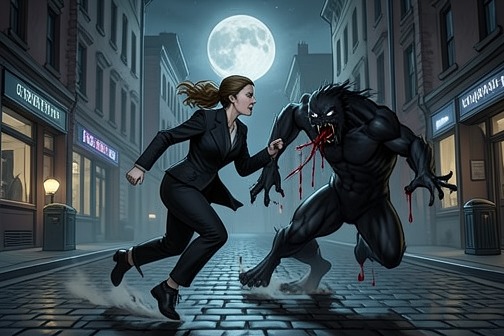
[Esmeralda Escapes the Mansion and Is Attacked by a Vampire](entity:event-recall-event-87fb70007b9b) is the decisive crisis that follows [Esmeralda](entity:character-recall-character-esmeralda-32d382dfd1fd)’s purchase as [Aleksander Dumoulin](entity:character-recall-character-aleksander-dumoulin-4c9cd3d1a321)’s human pet. Her flight briefly breaks the imposed order of [Dumoulin Mansion](entity:location-recall-location-dumoulin-mansion-c837e25cc790), but the city’s danger turns escape into survival. By the time Aleksander finds her, she has been assaulted by another vampire, and his rescue binds protection, ownership, bodily violence, and desire into a single confrontation.
## Causes and Background
The event grows directly out of the system that has already reduced humans to merchandise. In the human pet store, humans are kept in cages with straw, water, and scraps of food, while collars, leashes, clothing, and toys are sold as accessories. Aleksander selected a black collar decorated with pearls and lace and marked by a large black gemstone, then compelled Esmeralda to put it on after telling her that she was his. The collar therefore functioned not merely as clothing but as a visible sign of captivity and possession. When Esmeralda later removes it, leaving it on her bed, her escape rejects the object that had been used to define her place in Aleksander’s household.
The immediate alarm comes shortly after midnight. [Judith](entity:character-recall-character-judith-828392ad7f2b) enters in a panic and reports that Esmeralda is no longer in her room, that the collar has been left on the bed, and that the window stands open. The locked window has not simply been forgotten: Esmeralda used the curtain rod to force the lock. Her escape is consequently deliberate and resourceful, not an accidental disappearance. Aleksander leaves the mansion at once, calculating the interval since she went to bed and assuming that she cannot yet have gone far because she does not know the city. He also reasons that the concentration of vampires will probably drive her toward the outer edge of the city.
## The Flight and Attack
Aleksander takes flight over the streets in search of Esmeralda. Near the new breeding farm, he hears a woman scream, and the wind carries him the scent of lilac. The two signals lead him to a scene that sharply contrasts with the commercial captivity of the pet store: Esmeralda is no longer enclosed in a cage, but outside the mansion she is exposed to predation by another member of the same dominant species.
A blond vampire stands over Esmeralda with a knife pressed to her throat. He has torn the top of her dress open, exposing her breasts, and a deep cut crosses her arm as dark blood runs from it. His fangs are lowered as he prepares to feed. The attack combines physical injury, sexualized exposure, and the extraction of blood, making Esmeralda’s body the contested ground of vampire power. Her escape has carried her from one form of human commodification into an immediate threat of consumption.
Aleksander intervenes before the attacker can bite. He orders the vampire away and uses a wave of vampiric power to startle and throw him off balance. When the attacker asks who he is and calls Esmeralda his prey, Aleksander answers that she is his pet and threatens to tear the vampire apart if he touches her. The language is morally unstable: Aleksander opposes the assault, yet he does so through the same ownership vocabulary that helped imprison Esmeralda in the first place. His claim protects her from one predator while reaffirming his own possession of her.
The attacker questions why Aleksander’s pet is alone, but Aleksander refuses to explain. When the blond vampire steps over Esmeralda, Aleksander kicks him in the stomach and sends him backward. The vampire lunges with the knife and drives it deeply into Aleksander’s shoulder. Rather than retreat, Aleksander grips the attacker’s hand, keeps him close, and answers the wound with repeated blows to his face. The fight shifts the immediate value of the scene from Esmeralda’s vulnerability toward the attacker’s defeat, while Aleksander’s injury makes the rescue costly rather than effortless.
Aleksander’s violence culminates in the assertion, [“Nobody touches what’s mine.”](entity:expression-recall-expression-nobody-touches-wha-1314d6e35666) The sentence exposes the central contradiction of the event. It is a declaration of defense, but it is also an unmistakable statement of ownership. Esmeralda is saved because Aleksander refuses to permit another vampire to claim access to her body; the same logic leaves her positioned as an object whose rightful possessor is Aleksander. The rescue therefore does not abolish the pet system. It intensifies the personal force with which Aleksander enforces it.
The attacker’s face becomes unrecognizable from the beating, with swollen eyes and blood pouring from his mouth. Aleksander displays his fangs and lengthened nails, making clear that he is prepared to continue. The blond vampire finally abandons the fight, declaring, “This is not worth it. I’m out of here!” His retreat ends the immediate danger, but it also leaves the encounter defined by asymmetrical power: Esmeralda survives because Aleksander is strong enough to overpower a fellow vampire, while Aleksander himself has been stabbed and must carry the wound back to the mansion.
## Rescue and Return
After the attacker flees, Esmeralda moves toward the wall, breathing raggedly and trying to cover her exposed breasts with one arm. She apologizes while still searching for the vampire who had threatened her. Aleksander is furious at her disobedience because the escape could have ended in her death, yet he postpones punishment and tells her that the matter will be dealt with later. His first practical response is to examine the wound on her arm and determine that the gash is superficial and should heal quickly with proper care.
Aleksander then removes the knife from his own shoulder. The act makes his injury visible to Esmeralda, who flinches at the sight of his blood, and it changes the rescue from a simple act of dominance into a shared aftermath of bodily harm. They are close enough to Dumoulin Mansion for him to fly back despite the wound. Carrying Esmeralda in his arms, he feels the scent of her blood and struggles against the instinct to feed: his fangs grow, and he hisses through clenched teeth, but the urgent priority is returning her to safety and treating both injuries.
Judith and several servants wait at the mansion entrance. Judith rushes toward Esmeralda and Aleksander, but Aleksander immediately assigns her care of Esmeralda, ordering that the girl be changed and kept in her room so that she cannot leave again. Esmeralda says nothing and obeys. The final command is that her collar be put back on, restoring the visible emblem she had removed and reasserting the domestic order broken by her flight. The event thus ends not with freedom, but with enforced return, renewed surveillance, and the reinstallation of the object associated with her status as a pet.
## Blood, Desire, and Reclassified Intimacy
The rescue also prepares a deeper shift in the relationship. Soon afterward, Esmeralda agrees to let Aleksander drink from her, and he sinks his fangs into her neck while she grips his arm. Her blood overwhelms him; he experiences it as unlike any human blood he has tasted and recognizes that he will not be able to do without her. Feeding becomes more than routine consumption. As he drinks slowly, their heartbeats move together, and he perceives her private memories and emotions, including her fear of being caught by vampires and the desire arising in the moment itself.
This blood exchange gives the earlier attack a lasting consequence. The vampire who assaulted Esmeralda treated her blood as prey and access as entitlement; Aleksander’s later feeding is presented as mutually accepted, but it remains rooted in the same unequal vampire-human structure that makes her body available for consumption. The difference lies in consent and emotional connection, not in the disappearance of the power imbalance. Their connection therefore transforms the meaning of blood without freeing it from the economy of possession, appetite, and danger.
## From Possession to the Fated-Mate Claim
The event’s language of ownership later acquires a more complicated meaning when Aleksander confronts Esmeralda’s werewolf pack. As the wolves prepare to attack him, his strength is failing, yet he demands that they give back his mate. The word emerges before he consciously chooses it, and he wants the entire pack to know that Esmeralda is his. The claim echoes his earlier insistence that nobody may touch what belongs to him, but it also marks a movement beyond the purchased identity of a human pet. The collar names a social possession imposed by vampire custom; mate names a bond recognized in the conflict between species.
The werewolf Alpha rejects the prospect of Aleksander’s survival with Esmeralda, saying that the Moon Goddess chose poorly and that, after her death, Aleksander would have to live alone for hundreds of years in mourning. Aleksander answers that he will turn Esmeralda into a vampire so that she can live as long as he does, while the Alpha rejects the proposal and Esmeralda affirms it. Although this later confrontation is not part of the escape itself, it reveals why the attack matters within the larger arc: the flight exposes Esmeralda to danger, the rescue deepens Aleksander’s attachment, and the resulting bond eventually becomes an argument over whether her future belongs to her pack, to Aleksander, or to her own stated choice.
## Consequences and Narrative Significance
The escape produces no immediate liberation, but it does alter the emotional and narrative balance. Esmeralda proves that the restrictions surrounding her can be challenged: she forces open a locked window with a curtain rod, removes the collar, and reaches the city without being detected until the attack. At the same time, the city demonstrates that flight from the mansion does not place her outside violence. She encounters a vampire who is willing to expose, wound, and consume her, and her survival depends on another vampire’s intervention.
For Aleksander, the episode turns abstract possession into active protection. He leaves the mansion without delay, searches through the night, accepts a knife wound while fighting, carries Esmeralda home, resists feeding from her blood while she is injured, and orders the servants to treat her. Those actions make his attachment physically costly and behaviorally concrete. Yet the same sequence preserves coercion: he calls her his pet, orders her confinement, and requires the collar’s return. The event’s decisive tension is therefore not between ownership and freedom as cleanly opposed states, but between rival forms of control, with protection functioning as both care and justification for continued possession.
As a plot structure, the episode combines escape, pursuit, rescue, and temptation. Its value reversal is rapid: Esmeralda moves from confinement to apparent freedom, from freedom to mortal peril, and from peril to guarded safety that remains another form of confinement. The open window promises an exit, while the restored collar closes the movement symbolically. The later blood bond and fated-mate claim keep that contradiction alive, allowing a violent rescue to become the threshold through which captivity is recast as intimacy and personal ownership begins to resemble, without fully becoming, reciprocal belonging.
Event 4
Esmeralda First Feeds Aleksander Her Blood
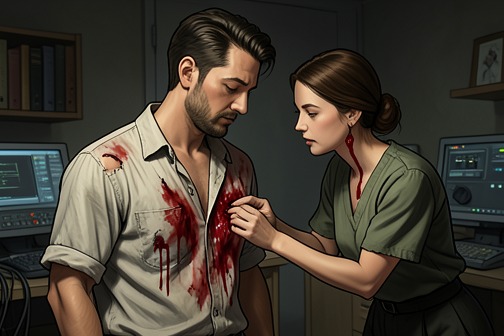
[Esmeralda First Feeds Aleksander Her Blood](entity:event-recall-event-fb0affe5bafb) marks the moment when an imposed master-and-pet arrangement begins to change into a reciprocal, dangerous intimacy. After [Aleksander Dumoulin](entity:character-recall-character-aleksander-dumoulin-4c9cd3d1a321) saves [Esmeralda](entity:character-recall-character-esmeralda-32d382dfd1fd) from a vampire attack and suffers a serious shoulder wound, Esmeralda offers her blood to help him heal. The feeding is presented not merely as nourishment but as a threshold: her fear and gratitude meet his predatory desire, and the exchange leaves both characters bound by sensations, memories, and a certainty that neither fully possessed before it.
## Causes and Background
The event follows a rapid sequence of possession, protection, and unease. Under the restored vampire laws, humans have been forced back into a subordinate place, while human breeding farms have opened and dissent has been crushed by the Queen’s regime. Aleksander accepts this hierarchy rather than resisting it. At the human pet store, he chooses Esmeralda and returns to her cage with a collar, ordering her to wear it. When she hesitates, he insists that she belongs to him and waits until she obeys; the black gemstone collar therefore establishes the unequal social script in which the later feeding takes place. His language and conduct frame Esmeralda as property, even while her rebellious gaze makes clear that submission has not erased her will.
Aleksander also explains that the relationship resembles human pet ownership: he will care for Esmeralda, and she will keep him company. Esmeralda’s nervous question about whether he will drink from her exposes the central threat concealed inside that arrangement. Aleksander confirms that he will, though he says he wants her to desire it rather than simply endure it. The statement makes anticipation itself part of his control. The later offering of blood consequently emerges from a relationship already shaped by coercive law, ownership, and unequal power, but it also becomes the first moment in which Esmeralda actively proposes the exchange rather than merely receiving his commands.
## The Offer and the Threshold of Consent
The scene begins the morning after the attack. The scent of lilac recalls the violence of the previous night, including Esmeralda’s near exposure to danger, while whiskey remains on Aleksander’s tongue. He has slept later than usual because of his injury. Esmeralda sits beside his bed in a simple white shirt, wearing the collar he required; her arm is bandaged, and the absence of visible blood reassures him that she has not worsened. Her warmth against his arm and the pulse of blood in her veins draw his attention at once toward care and appetite.
When Esmeralda worries about him, Aleksander takes her hand, noting that this is their first direct contact beyond his rescue of her. He dwells on the softness and warmth of her skin and on the blood moving beneath it. He tells her that fresh blood would heal his wound more quickly, explaining that human blood is the vampires’ main vital source, while [Blood Wine](entity:object-recall-object-23f128f25e89), synthesized from donated blood, allows adult vampires to survive without sacrificing humans but lacks the purity and power of fresh blood. Fresh blood, he says, can increase a vampire’s powers tenfold, including healing. The explanation gives Esmeralda a concrete understanding of what her body would provide and makes the coming act a deliberate choice within the story’s supernatural economy.
Esmeralda responds by offering her blood. Aleksander is astonished because she had been frightened and trying to escape only the previous day. She justifies the offer through gratitude: he saved her life, and his injury occurred because he protected her, so she considers her blood the least she can give in return. Her formerly stubborn eyes now contain courage, shifting the scene’s immediate value from pure possession toward mutual risk. The decision remains complicated rather than wholly free of pressure, since Aleksander has already claimed ownership of her and has told her that feeding is inevitable. Yet the narrative gives Esmeralda the initiating gesture, allowing her to convert fear into an act she believes can repay him.
Before the bite, Esmeralda asks whether she will die. Aleksander reassures her that she will not, and he carefully considers the shallow wound on her arm so that he will not drink too much. He removes her collar, but only under conditions he defines: she may remove it before him, because he alone is permitted to admire her exposed neck during such intimate moments. The collar thus remains symbolically present even when physically undone. Esmeralda’s face holds yearning and apprehension at once, and she nods despite that conflict. Her response does not erase the possessive structure of the encounter; instead, it shows desire developing inside and against that structure.
## The First Feeding
Aleksander asks whether Esmeralda is ready. She answers yes and grips his arm in preparation for the bite. When he sinks his fangs into her neck, she gives a muffled moan and digs her nails into his skin. The feeding is therefore narrated as a shared bodily reaction rather than a one-sided act of predation. Her heartbeat, shallow breathing, and physical tension become part of the scene’s communication, while Aleksander’s hunger threatens to overwhelm the restraint he has promised to exercise.
The blood tastes unlike anything Aleksander has experienced. He drinks slowly, savoring Esmeralda, but he stops short of taking enough to harm her. During the exchange, their heartbeats move together, and the blood bond grants him access to her most secret thoughts and memories. He experiences her fear of being caught by vampires alongside the lust she feels in the present moment, then finds himself submerged in the same desire. The event therefore produces recognition through the body: Aleksander does not merely learn about Esmeralda’s divided state through her explanation; he receives fear and desire as sensations passing directly between them.
When Aleksander withdraws his fangs, Esmeralda asks for more. He answers that she is his and licks the puncture, healing the skin, while she confirms the claim in a trembling voice. Her repeated request for more makes the scene’s reversal unmistakable. The human who once tried to flee now pursues the forbidden pleasure, while the vampire who longs to devour her must impose a limit. The power relation has not disappeared, but its emotional direction has changed: appetite is no longer located solely in Aleksander, and Esmeralda’s desire becomes an active force within the bond.
The immediate physical consequence confirms the exceptional nature of the exchange. Aleksander discovers that his shoulder no longer hurts, and the healing is much stronger than usual. He postpones considering why, distracted by Esmeralda’s presence and by the intensity of his response to her. He stops her from giving more because her body needs rest, even as he remains under her spell. The scene then moves into sexual intimacy, with Aleksander treating Esmeralda as a forbidden treasure and responding to the desire they now share. The blood exchange has thus crossed from medical necessity into erotic attachment, carrying the language of ownership into a relationship that increasingly operates through reciprocal longing.
## Transformation of Aleksander’s Attachment
Before Esmeralda feeds him, Aleksander’s interest is expressed through possession and the wish to tame her rebelliousness. Afterward, he recognizes that acquiring a pet has filled an emptiness he had not known how to name. He becomes grateful that the laws allowed him to meet Esmeralda and decides that he will never let her leave his life. The event changes the meaning of the pet system for him: what began as a lawful purchase and an exercise of domination becomes, in his perception, the discovery of an attachment capable of overcoming his existential vacancy.
That transformation does not constitute a clean moral redemption. Aleksander still speaks of Esmeralda as his, still regulates access to her body, and still understands her blood through a predator’s hunger. The narrative instead binds care, desire, healing, and ownership together. His restraint in limiting the feeding coexists with his insistence on exclusivity, while Esmeralda’s gratitude and arousal coexist with apprehension. The first feeding is powerful precisely because it does not resolve those contradictions; it makes them intimate, embodied, and difficult for either character to escape.
## Consequences for the Bond
The first feeding also establishes a pattern that later governs the pair’s responses to danger. Aleksander’s possessive declaration that nobody may touch what belongs to him is first enacted through the collar and then violently defended when another vampire attacks Esmeralda. Although the later confrontation is not part of the bedroom scene itself, it reveals the feeding’s lasting consequence: Esmeralda is no longer merely a purchased human in Aleksander’s household. She has become the person whose injury provokes his most immediate and disproportionate retaliation. When the attacker wounds Aleksander in the shoulder, Aleksander answers with repeated blows until the vampire’s face is unrecognizable, treating the assault as an invasion of the bond formed through her blood.
The event likewise anticipates Aleksander’s later recognition of Esmeralda as his mate. During the conflict with her werewolf-witch pack, he calls her his mate before he has consciously planned the word, insisting that everyone should know she is his. That declaration gives the earlier blood exchange a larger retrospective significance. What Aleksander initially interprets as the filling of an existential emptiness becomes part of a relationship acknowledged against both vampire and werewolf boundaries. Esmeralda eventually chooses him openly, saying that she loves him and accepting that she may lose the possibility of leading her pack. Her decision does not erase the coercion surrounding her original purchase, but it confirms that the attachment created through fear, rescue, blood, and desire has become a mutual allegiance in the plot.
## Retrospective Meaning and Narrative Significance
The scene is narrated by Aleksander in retrospect, and its remembered details reveal how thoroughly the event reorganizes his understanding of his own life. He later thinks back to everything he did for Esmeralda and declares that he would do it all again, even damning the whole world at her request. He also returns mentally to the day he entered the pet store, recognizing that he could not have known then that the purchase would alter his future. The blood exchange is therefore the emotional hinge between two versions of Aleksander: the vampire who welcomes the restored hierarchy because it restores humans to prey, and the man who comes to imagine rebuilding a world around one human woman.
Its consequences extend beyond immediate healing. Aleksander’s shoulder recovers with unusual force after Esmeralda’s blood, and he concludes that the effect is stronger than ordinary restorative power. The discovery remains unexplained within the scene, but it marks Esmeralda’s blood as exceptional and gives the relationship a material dimension: her body changes his condition, just as his bite changes her place in his world. By the end of the story, Aleksander plans to make her a vampire and his wife, perhaps also the mother of his children if she wishes. The first feeding thus serves as the beginning of a projected transformation from pet to immortal partner, even though that future remains an intention rather than an accomplished event.
The event’s dramatic force comes from its unstable value shift. It begins with injury, fear, and an unequal ownership structure; passes through an offer framed as gratitude; and ends in shared desire, intensified attachment, and physical recovery. Blood operates simultaneously as food, medicine, erotic medium, and evidence of connection. The exchange does not simply make Aleksander stronger. It gives him access to Esmeralda’s fear and lust, while her request for more demonstrates that the vampire’s appetite has become entangled with her own. In this way, the scene converts a system designed to formalize human subordination into the first ritual through which the two characters imagine belonging to each other.
That conversion remains ethically conflicted. The restored vampire laws have made the purchase possible, and Aleksander initially approves the laws because they return humans to what he considers their natural place on the food chain. His tenderness therefore develops inside the same political order that permits Esmeralda to be bought, collared, and treated as property. The narrative grants the couple intimacy and eventual happiness without fully dismantling that structure. The first feeding is consequently both a romantic turning point and a revelation of how domination can be recast as care: Aleksander protects Esmeralda, limits the amount of blood he takes, and responds to her desire, yet continues to claim exclusive authority over her body.
As a threshold event, Esmeralda First Feeds Aleksander Her Blood joins several identity changes into one concentrated scene. Esmeralda remains human, but she becomes a willing donor, an intimate partner, and the source of an unusually powerful healing effect. Aleksander remains a vampire and owner within the law, but he becomes emotionally dependent on the person he purchased and begins to understand his attachment as something closer to love and fate than possession. The later promises of mating, transformation, marriage, and a shared future all depend on this first exchange, when fear does not vanish but is crossed by courage, desire, and an irreversible bodily bond.
Event 5
Werewolves Attack the Vampire Mansion and Abduct Esmeralda
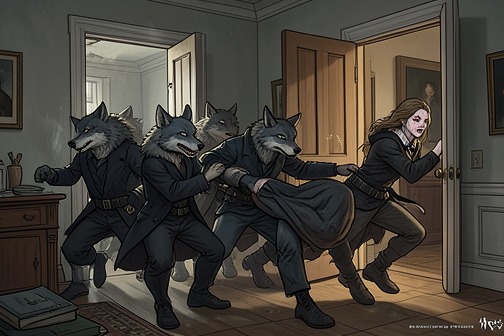
[Werewolves Attack the Vampire Mansion and Abduct Esmeralda](entity:event-recall-event-e2ff1a3e5077) is the decisive rupture between [Aleksander Dumoulin](entity:character-recall-character-aleksander-dumoulin-4c9cd3d1a321)’s carefully arranged life with [Esmeralda](entity:character-recall-character-esmeralda-32d382dfd1fd) and the wider claims of her werewolf-witch family. What begins as a planned birthday retreat becomes a scene of wreckage, death, and abduction. In its aftermath, Aleksander identifies Esmeralda not merely as his vampire pet but as his mate, and the pursuit of the werewolf pack reveals that her position as the Alpha and Luna’s daughter gives the conflict a political and familial weight beyond a dispute between individuals.
## Causes and Background
The attack takes place against a society already unsettled by the Queen’s reinstated old vampire laws. Human breeding farms have opened, hybrid families have been torn apart, and protests have been suppressed through violence or death. Within that atmosphere of restored hierarchy and coercive order, Esmeralda occupies an especially unstable position: she is a human by birth, a member of a distant pack of werewolf witches by upbringing, and a captive acquired through the vampire pet system. Her own account establishes that she grew up far to the northwest among werewolf witches, although she was born without either a wolf or magic. The pack’s relative isolation explains her limited knowledge of vampires, while the hostility between vampires and werewolf packs makes her presence in [Ichoryllia](entity:location-recall-location-ichoryllia-071711da169b) politically dangerous even before her relatives arrive.
Aleksander has also imposed a private structure of ownership around her. After buying Esmeralda, he gives her a black gemstone collar and orders her to wear it, declaring that she belongs to him. He describes the arrangement as one in which he will care for her while she keeps him company, but the language of care remains inseparable from the legal and social assumptions of the vampire pet system. Esmeralda’s nervous question about whether he will drink from her exposes the bodily stakes of that arrangement. Their relationship then shifts through increasingly intimate acts: she offers her blood, he feeds from her for the first time, and the exchange creates a powerful connection in which they experience each other’s emotions and memories. These developments do not erase the coercive origin of the relationship, but they help explain why the later abduction is experienced by Aleksander as the loss of the person who has displaced his existential emptiness.
The immediate occasion for the attack is Aleksander’s attempt to turn that relationship into a shared private future. Esmeralda has told him that her birthday is approaching, and although he pretends indifference, he secretly books a cabin at [Sleeping Lake](entity:location-recall-location-sleeping-lake-f8e962c1a6b0), several hours away by flight. He plans to spend a few days there with her alone, remembering that she misses swimming in lakes and rivers and even preparing to dance despite his inexperience. The planned excursion matters because it shows him attending to her preferences rather than merely managing her presence. He also buys white lilies, whose long petals carry reddish spots, and has them arranged into a bouquet of red and white flowers. The tenderness of this preparation makes the violence awaiting him at the mansion more abrupt: a private celebration is prepared at the exact moment when the pack is preparing to reclaim one of its own.
## Destruction of the Mansion
When Aleksander returns, the approaching mansion immediately signals that the domestic order he has built has collapsed. Its windows are shattered, stained glass covers the floor, and the front door hangs open and off its hinges, marked by claw scratches. He runs toward the house with the bouquet in his hands, but the wind strips away its petals as panic overtakes him. The flowers, intended as a birthday gift, become a visual trace of the interrupted future he had imagined with Esmeralda.
Inside, the destruction is comprehensive rather than symbolic only. Armchairs have been torn apart, their fabric peeling away; the walls bear the scars of battle; and dust still hangs in the air. Crying from the kitchen leads Aleksander to [Judith](entity:character-recall-character-judith-828392ad7f2b) and other servants, who are gathered on the floor beside the body of his butler. The butler has been mutilated by scratches and bites, and even Aleksander’s healing expectations offer little hope that he remains alive. When Aleksander takes the man’s arm, it is already cold and rigid. He waits for a pulse, but finds none.
The death carries a personal history that the ruined room cannot contain. The butler has been present throughout Aleksander’s life, a constant figure who had helped him whenever he needed support. Kneeling beside the body, Aleksander remembers that loyalty and confronts his own absence: he was away on the very day that something attacked his home. Judith explains through sobs that the butler tried to protect the servants. Her testimony turns the attack from a simple seizure of Esmeralda into an assault that has killed a household member and injured the community Aleksander regards as his responsibility.
Judith identifies the attackers as werewolves. She explains that they came, destroyed everything, and that the servants were trying to protect Esmeralda. The revelation changes the meaning of the wreckage at once. Aleksander had assumed that Esmeralda’s pack might never find her, despite knowing that werewolves protected their own, and he had not expected an operation carried out in broad daylight in the middle of a vampire city. The scale and timing of the assault convince him that Esmeralda must be unusually important to them. Her silence about her exact role in the pack now appears significant, and the question of what she had been hiding becomes inseparable from the question of why so many werewolves were willing to attack his mansion.
## Abduction and Recognition
The servants tell Aleksander that the werewolves took Esmeralda despite her screams and attempts to make them release her. Her resistance confirms that the abduction is not presented as a willing return. At the same time, the scene exposes the limits of the ownership language Aleksander has used. He has called her his pet and required her to wear the collar, but the pack treats her as a daughter whose family has the right and duty to retrieve her. Two claims over Esmeralda collide in the destroyed mansion: the vampire household’s possession of its purchased human and the werewolf family’s obligation to protect its own.
Aleksander’s response is first expressed through loss and then through a new name for the relationship. He thinks that the attackers have taken the one person who drove away his emptiness; they have taken his pet, and then, with a shock of recognition, his mate. He had not considered the possibility because Esmeralda is human, yet memories immediately reorganize themselves around the discovery: her attempted escape on the first night, his distress when she ran, and his rage when another vampire attacked her. What had previously seemed like isolated possessive reactions now appears to him as evidence of the fated-mate bond between [Aleksander Dumoulin and Esmeralda](entity:relation-recall-relation-aleksander-dumoulin-94ba18c4a2d3).
The recognition changes the objective of the event. Aleksander no longer treats the ruined mansion as the immediate priority. He instructs the servants to rest, promises that the house will be repaired, and says that the dead butler will receive a proper burial after he returns with Esmeralda. He is sorry to leave them in their grief, but the need to pursue her overwhelms every competing obligation. His declaration, “I’m going to get my mate back!”, turns private realization into a public vow before the servants. He leaves in haste, following Esmeralda’s faint lilac scent through the city and toward the western forest, while promising that the attackers will pay.
Werewolves Attack the Vampire Mansion and Abduct Esmeralda is the decisive rupture between Aleksander Dumoulin’s carefully arranged life with Esmeralda and the wider claims of her werewolf-witch family. What begins as a planned birthday retreat becomes a scene of wreckage, death, and abduction. In its aftermath, Aleksander identifies Esmeralda not merely as his vampire pet but as his mate, and the pursuit of the werewolf pack reveals that her position as the Alpha and Luna’s daughter gives the conflict a political and familial weight beyond a dispute between individuals.
## Causes and Background
The attack takes place against a society already unsettled by the Queen’s reinstated old vampire laws. Human breeding farms have opened, hybrid families have been torn apart, and protests have been suppressed through violence or death. Within that atmosphere of restored hierarchy and coercive order, Esmeralda occupies an especially unstable position: she is a human by birth, a member of a distant pack of werewolf witches by upbringing, and a captive acquired through the vampire pet system. Her own account establishes that she grew up far to the northwest among werewolf witches, although she was born without either a wolf or magic. The pack’s relative isolation explains her limited knowledge of vampires, while the hostility between vampires and werewolf packs makes her presence in Ichoryllia politically dangerous even before her relatives arrive.
Aleksander has also imposed a private structure of ownership around her. After buying Esmeralda, he gives her a black gemstone collar and orders her to wear it, declaring that she belongs to him. He describes the arrangement as one in which he will care for her while she keeps him company, but the language of care remains inseparable from the legal and social assumptions of the vampire pet system. Esmeralda’s nervous question about whether he will drink from her exposes the bodily stakes of that arrangement. Their relationship then shifts through increasingly intimate acts: she offers her blood, he feeds from her for the first time, and the exchange creates a powerful connection in which they experience each other’s emotions and memories. These developments do not erase the coercive origin of the relationship, but they help explain why the later abduction is experienced by Aleksander as the loss of the person who has displaced his existential emptiness.
The immediate occasion for the attack is Aleksander’s attempt to turn that relationship into a shared private future. Esmeralda has told him that her birthday is approaching, and although he pretends indifference, he secretly books a cabin at Sleeping Lake, several hours away by flight. He plans to spend a few days there with her alone, remembering that she misses swimming in lakes and rivers and even preparing to dance despite his inexperience. The planned excursion matters because it shows him attending to her preferences rather than merely managing her presence. He also buys white lilies, whose long petals carry reddish spots, and has them arranged into a bouquet of red and white flowers. The tenderness of this preparation makes the violence awaiting him at the mansion more abrupt: a private celebration is prepared at the exact moment when the pack is preparing to reclaim one of its own.
## Destruction of the Mansion
When Aleksander returns, the approaching mansion immediately signals that the domestic order he has built has collapsed. Its windows are shattered, stained glass covers the floor, and the front door hangs open and off its hinges, marked by claw scratches. He runs toward the house with the bouquet in his hands, but the wind strips away its petals as panic overtakes him. The flowers, intended as a birthday gift, become a visual trace of the interrupted future he had imagined with Esmeralda.
Inside, the destruction is comprehensive rather than symbolic only. Armchairs have been torn apart, their fabric peeling away; the walls bear the scars of battle; and dust still hangs in the air. Crying from the kitchen leads Aleksander to Judith and other servants, who are gathered on the floor beside the body of his butler. The butler has been mutilated by scratches and bites, and even Aleksander’s healing expectations offer little hope that he remains alive. When Aleksander takes the man’s arm, it is already cold and rigid. He waits for a pulse, but finds none.
The death carries a personal history that the ruined room cannot contain. The butler has been present throughout Aleksander’s life, a constant figure who had helped him whenever he needed support. Kneeling beside the body, Aleksander remembers that loyalty and confronts his own absence: he was away on the very day that something attacked his home. Judith explains through sobs that the butler tried to protect the servants. Her testimony turns the attack from a simple seizure of Esmeralda into an assault that has killed a household member and injured the community Aleksander regards as his responsibility.
Judith identifies the attackers as werewolves. She explains that they came, destroyed everything, and that the servants were trying to protect Esmeralda. The revelation changes the meaning of the wreckage at once. Aleksander had assumed that Esmeralda’s pack might never find her, despite knowing that werewolves protected their own, and he had not expected an operation carried out in broad daylight in the middle of a vampire city. The scale and timing of the assault convince him that Esmeralda must be unusually important to them. Her silence about her exact role in the pack now appears significant, and the question of what she had been hiding becomes inseparable from the question of why so many werewolves were willing to attack his mansion.
## Abduction and Recognition
The servants tell Aleksander that the werewolves took Esmeralda despite her screams and attempts to make them release her. Her resistance confirms that the abduction is not presented as a willing return. At the same time, the scene exposes the limits of the ownership language Aleksander has used. He has called her his pet and required her to wear the collar, but the pack treats her as a daughter whose family has the right and duty to retrieve her. Two claims over Esmeralda collide in the destroyed mansion: the vampire household’s possession of its purchased human and the werewolf family’s obligation to protect its own.
Aleksander’s response is first expressed through loss and then through a new name for the relationship. He thinks that the attackers have taken the one person who drove away his emptiness; they have taken his pet, and then, with a shock of recognition, his mate. He had not considered the possibility because Esmeralda is human, yet memories immediately reorganize themselves around the discovery: her attempted escape on the first night, his distress when she ran, and his rage when another vampire attacked her. What had previously seemed like isolated possessive reactions now appears to him as evidence of the fated-mate bond between Aleksander Dumoulin and Esmeralda.
The recognition changes the objective of the event. Aleksander no longer treats the ruined mansion as the immediate priority. He instructs the servants to rest, promises that the house will be repaired, and says that the dead butler will receive a proper burial after he returns with Esmeralda. He is sorry to leave them in their grief, but the need to pursue her overwhelms every competing obligation. His declaration, “I’m going to get my mate back!”, turns private realization into a public vow before the servants. He leaves in haste, following Esmeralda’s faint lilac scent through the city and toward the western forest, while promising that the attackers will pay.
## Pursuit and Forest Confrontation
The pursuit carries the conflict across a boundary between vampire urban space and werewolf territory. As Aleksander travels west, Esmeralda’s scent grows stronger. His heightened senses detect the pack before he reaches it: panting wolves, cracking branches, and the sounds of someone struggling. Esmeralda’s voice confirms that she is nearby and still resisting. The abduction therefore develops into an active chase rather than ending at the mansion; Aleksander follows the trail while the pack attempts to force its captive deeper into the forest.
The confrontation quickly becomes physical. Aleksander is attacked by the werewolves and loses strength under the assault, yet he continues to resist. When the pack prepares to pounce, he roars for Esmeralda to be returned and calls her his mate, insisting that everyone hear the claim. The declaration is significant because the word escapes before he has time to restrain or qualify it. In the forest, amid the pack’s collective violence, he converts the newly recognized bond into a challenge to the werewolves’ authority over her.
The pack’s leadership then becomes visible. A woman who resembles Esmeralda, older and graying, stops the pursuit after catching her daughter. Aleksander recognizes the same expression in the woman’s eyes that he had seen in Esmeralda’s when they first met and understands that she is [Alyson](entity:character-recall-character-alyson-efbb1a6b2385), Esmeralda’s mother. The werewolf Alpha, [Thomas](entity:character-recall-character-thomas-96b965fcdef2), has already wounded Aleksander; when Alyson intervenes, he withdraws his claws and returns to human form. Her authority over the pack is made explicit when she questions Thomas’s right to challenge his Luna’s choices, establishing that the rescue party is governed not only by instinct but also by an internal family and leadership structure.
## Family Authority and Competing Rules
The forest encounter reveals why the pack considered Esmeralda’s recovery imperative. [Thomas and Alyson](entity:relation-recall-relation-thomas-and-alyson-cd0312e92309) are the Alpha and Luna, and Esmeralda is their daughter and the next leader of the pack. Her value is therefore both intimate and institutional: she is a child being protected by her parents and a successor whose loss could alter the pack’s future. The attack was not simply an attempt to retrieve a missing member; it was an assertion of family sovereignty against a vampire household that had acquired the heir.
Alyson explains that the pack believed Esmeralda was being held against her will and treated badly. Her judgment is grounded in visible facts: Esmeralda had attempted to escape from the mansion on her first night there, and the pack had no reason to know that her circumstances had later changed. Aleksander himself recognizes the force of that earlier evidence. He had indeed held Esmeralda as a prisoner at first, even though he now believes that she is choosing to remain with him. The event thus preserves an unresolved ethical tension: his present claim of mutual attachment cannot erase the coercion that made the pack’s intervention reasonable from its own perspective.
A second order of authority enters when Alyson asks whether Aleksander is Esmeralda’s fated mate, the one assigned by the moon goddess. Her question places the relationship beyond the competing claims of vampire law and werewolf family custom. Alyson accepts that, if the bond is genuine, Aleksander is the person with whom Esmeralda should be. Yet Thomas rejects the implication, warning that Aleksander would be left alone for hundreds of years if Esmeralda died. His objection combines paternal fear with hostility toward a vampire whose lifespan makes the bond seem dangerous and unequal.
The dispute also invokes the established separation between the two peoples. Thomas states that, for the pack’s safety, vampires cannot visit. This prohibition functions as a collective security rule, not merely as a personal rejection of Aleksander. Against it stands Aleksander’s proposal that Esmeralda be turned into a vampire so that she can live as long as he does. Thomas immediately refuses, while Esmeralda answers in favor. The argument therefore places supernatural law, pack safety, parental authority, and the couple’s own choice into direct conflict without allowing any single system to settle the matter cleanly.
## Consequences and Significance
The abduction produces an irreversible reclassification of Esmeralda. Before the attack, Aleksander understands her through the categories of purchased pet, human companion, and emerging intimate partner. During the destruction of the mansion, he recognizes her as his mate; during the forest confrontation, her family identifies her as the Alpha and Luna’s daughter and future leader. Each label carries a different claim to her body, loyalty, movement, and future. The event’s central conflict is therefore not only where Esmeralda will live, but which relationship and rule system will define who she is.
The immediate consequences are severe. The [Dumoulin Mansion](entity:location-recall-location-dumoulin-mansion-c837e25cc790) is left in ruins, its servants traumatized, and its butler dead after attempting to protect the household. Aleksander postpones repair and burial in order to pursue Esmeralda, revealing how completely the attack redirects his priorities. His promise to return with her is at once a rescue mission, a declaration of attachment, and a response to the injury inflicted on his household.
Yet the forest scene complicates the language of rescue. Esmeralda has been taken against her will, but she is also claimed by a family that believed it was rescuing her from captivity. Alyson’s eventual acceptance of the fated-mate bond allows Esmeralda to choose Aleksander, while Thomas continues to oppose the relationship and bars vampire visits for the pack’s safety. Esmeralda’s own decision is decisive: she accepts the possibility of becoming a vampire, relinquishes the prospect of leading the pack, and affirms her love for Aleksander. Her choice makes the event a passage from abduction toward self-declared allegiance, even though the social and supernatural consequences remain unsettled.
The event’s broader significance lies in its collision of legal pluralism. The Queen’s restored vampire laws normalize human subordination and make the purchase of Esmeralda possible; the vampire pet system supplies the language of ownership; werewolf-witch family and pack rules authorize her retrieval; the Luna’s authority interrupts the Alpha’s violence; and the moon goddess’s fated-mate order offers a sacred rule capable of overruling both parental resistance and tribal separation. The mansion’s destruction is consequently the material form of a jurisdictional struggle. Its shattered windows, dead butler, abandoned birthday bouquet, and forest confrontation expose how private love in this world is never merely private: it is constantly tested by law, kinship, hierarchy, bodily transformation, and the competing powers that claim the right to decide Esmeralda’s future.
Event 6
Forest Confrontation and Confirmation of the Fated-Mate Bond
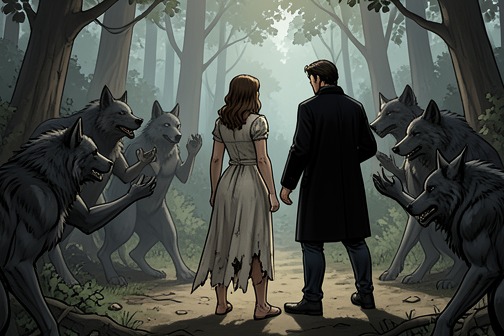
The [Forest Confrontation and Confirmation of the Fated-Mate Bond](entity:event-recall-event-5119cbeddde7) is the turning point at which [Aleksander Dumoulin](entity:character-recall-character-aleksander-dumoulin-4c9cd3d1a321)’s pursuit of [Esmeralda](entity:character-recall-character-esmeralda-32d382dfd1fd) becomes a public, life-threatening claim—and the hidden bond between them is recognized by her family. In the forest west of [Ichoryllia](entity:location-recall-location-ichoryllia-071711da169b), a fight over Esmeralda’s return to her pack becomes a test of competing loyalties: her parents’ authority, the pack’s safety, and her own choice of partner and future.
## Causes and Stakes
Esmeralda’s pack had come to the [Dumoulin Mansion](entity:location-recall-location-dumoulin-mansion-c837e25cc790) and abducted her, believing she was being held and mistreated. Their suspicion had grounds: Aleksander had bought her as a human pet, put a collar on her, and ordered her to wear it. Yet the relationship had already begun to change. After Esmeralda nervously asked whether he would drink from her, she later offered her blood herself; during that first feeding, their sensations and emotions became intertwined. The forest encounter brings those contradictory facts into the open: she had been taken from a coercive arrangement, but she was no longer simply trying to escape Aleksander.
Esmeralda’s background makes her return especially consequential. She had told Aleksander that she lived far to the northwest in a pack of werewolf witches, though she had been born without either a wolf or magic. Her pack had little contact with vampires, and the two peoples were mutually wary. When Aleksander follows the abductors’ trail out of Ichoryllia, he has no knowledge that Esmeralda is the Alpha and Luna’s daughter or that she is expected to lead the pack. His immediate purpose is narrower and more desperate: to find her and bring her back.
## Pursuit and Battle
Aleksander follows Esmeralda’s lilac scent as it grows stronger and leads west into the forest. His heightened senses pick up wolves panting, branches cracking, and someone struggling. He hears Esmeralda cry, “Let me go!” and calls her name. The sounds stop, but a dozen wolves emerge from the dense trees and surround him. When he asks where she is, the pack’s leader condemns him for taking one of their own and making her a pet, calling it an insult. Aleksander demands that they give her back.
The leader answers with a threat to kill him, then shifts into a huge wolf: his snout lengthens, his muscles swell, his clothes tear, and fur spreads over his body. Aleksander realizes that the transformed man is the Alpha. At the Alpha’s signal, the pack attacks all at once. Wolves bite and claw Aleksander from every side. He throws one to the ground, scratches at others, and bites a wolf that lunges toward his face. The attack keeps renewing as he tires; he persists because he believes Esmeralda is close and resolves to get her back or die trying.
The Alpha’s claws suddenly rake Aleksander’s back and drive him to his knees. As the wound opens further and his vision blurs, the surrounding wolves wait for their leader’s signal. Esmeralda cries, “Stop!” She appears with an older woman who resembles her, but that woman catches and restrains her before she can reach Aleksander. With the pack poised to attack again, Aleksander roars, “Give me back my mate!” The word comes out before he has consciously chosen it, but he does not take it back. His declaration turns the struggle from a rescue attempt into an explicit claim about what Esmeralda is to him.
## Recognition of the Bond
The woman orders the confrontation to halt. Aleksander recognizes in her eyes the same look he had seen in Esmeralda’s and realizes that she is Esmeralda’s mother. She addresses the Alpha with authority, asking, “Since when do you question your Luna’s choices?” The Alpha, [Thomas](entity:character-recall-character-thomas-96b965fcdef2), objects that his daughter’s life is at stake. Esmeralda insists that she is not in danger; [Alyson](entity:character-recall-character-alyson-efbb1a6b2385) replies that Esmeralda has said Aleksander saved her life and treated her well. Thomas is still determined to take his daughter back, but Alyson argues that what Aleksander has said changes the matter.
Thomas rejects the possibility that the Moon Goddess would mate a vampire with a werewolf. Alyson counters that the Goddess does not defer to racial boundaries and that no bond is purer or more important than that of fated mates. She releases Esmeralda, who runs to Aleksander and embraces him. Battered and bleeding, he holds her as tightly as he can; she weeps, and he tells her that he would have gone to the ends of the world to find her. The embrace resolves the immediate question of whether she will return willingly with her family: she has chosen to come back to him, and her mother’s intervention has stopped the pack from forcing the separation.
## Choice, Family, and Consequences
Alyson later apologizes for the damage to the mansion and the loss of Aleksander’s butler, explaining that the pack believed Esmeralda was imprisoned and badly treated. Aleksander recalls that she had indeed been a prisoner when she first tried to escape, while recognizing that she is now choosing to stay. Alyson asks whether he truly claims to be the mate chosen for Esmeralda by the Moon Goddess. When he confirms it, Alyson accepts that Esmeralda should be with him. Esmeralda thanks her mother, while Thomas remains angry that Alyson’s decision contradicts his attempt to protect their daughter.
Thomas raises the cost of Esmeralda’s choice: if she remains with a vampire, she may die before Aleksander, leaving him to mourn through centuries of life. Aleksander answers that he could turn her into a vampire so that she would live as long as he does. Thomas immediately refuses, while Esmeralda agrees. Alyson asks whether Esmeralda is sure, emphasizing that there is no going back. She accepts her daughter’s decision while acknowledging that it breaks her heart, and warns that becoming a vampire would mean Esmeralda could not lead the pack. Esmeralda says her brother has always wanted that role and declares her love for Aleksander. He tells her that he loves her too.
The decision does not erase the family’s political boundary. Thomas says that, for the pack’s safety, vampires cannot visit. Alyson nevertheless promises to visit Esmeralda in Ichoryllia, saying she is not afraid of rogue vampires and can defend herself with magic despite having no wolf. Thomas shifts back into a wolf and leaves, followed by the pack. Alyson stays long enough to assure Esmeralda that she will try to change his mind, then asks Aleksander to take good care of her and quietly departs into the forest.
## Aftermath and Significance
The scene ends not with the family conflict fully settled, but with Esmeralda and Aleksander together and the shape of her future made explicit. Her choice means giving up the expected leadership of her pack and potentially changing her species to share Aleksander’s lifespan. The fated-mate bond is confirmed not only by the couple’s declarations, but also by Alyson’s recognition of the Moon Goddess’s authority; Thomas’s resistance shows that supernatural recognition does not instantly reconcile family duty or pack policy.
Aleksander leaves the forest gravely hurt, leaning on Esmeralda as she helps him stand. He can already feel his healing beginning, though he expects full recovery to take several days; he also believes that drinking his mate’s blood would change that. When Esmeralda asks whether they are going home, the immediate crisis has passed, but the practical consequences remain: Aleksander must recover, Esmeralda’s family is divided over her decision, and Alyson’s promised visits offer a possible connection across the pack’s ban on vampire visitors.